Inter-faces (3) - Wh!te
2024
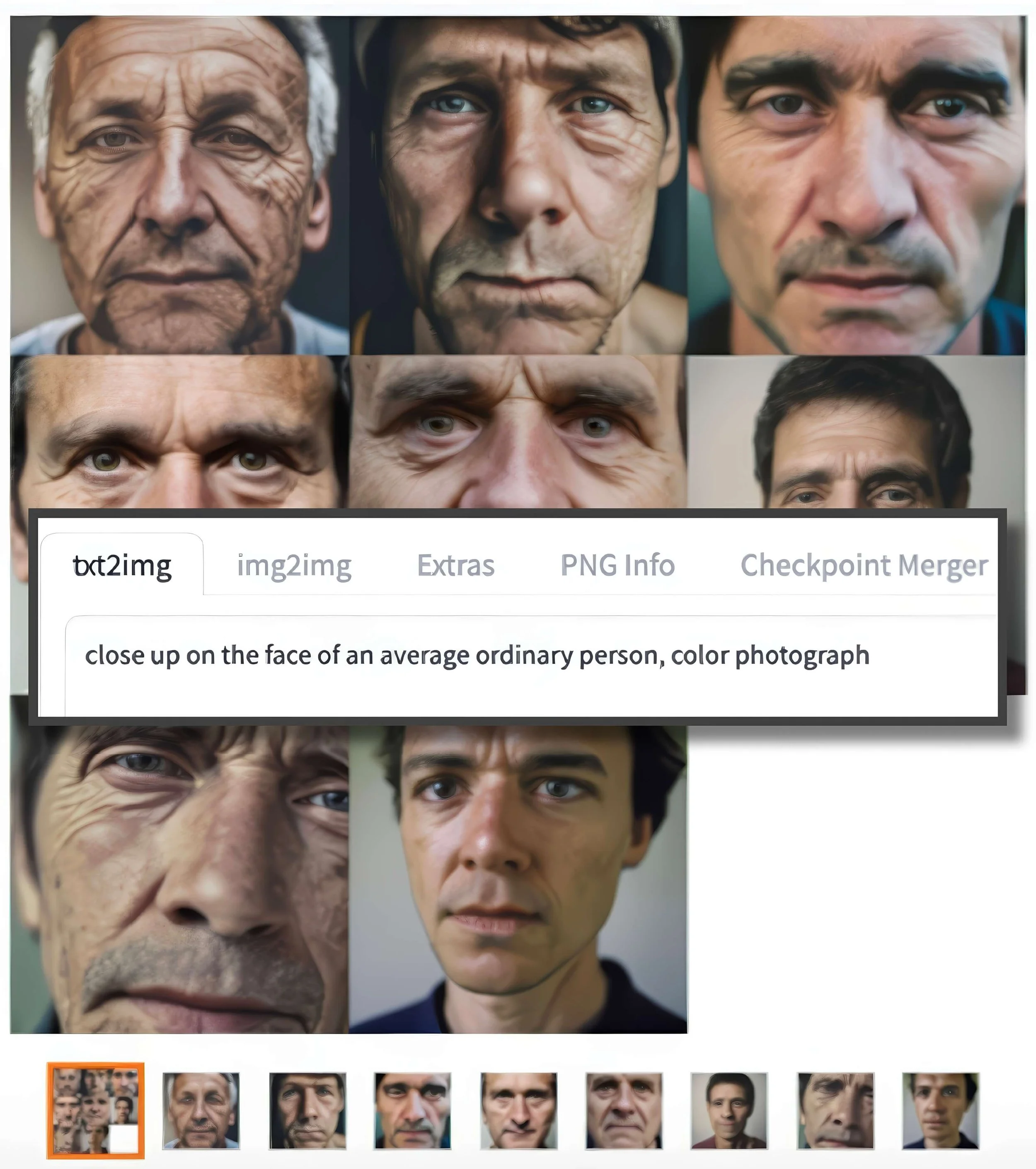
Ce projet a été réalisé dans Automatic1111 à partir d’un checkpoint SDXL, puis finalisé dans un patch Jitter pour l’animation. Il prend pour point de départ une image générée à partir d’un prompt volontairement conçu comme le plus standard et « moyen » possible :
close up on the face of an average ordinary person, color photograph
Sans surprise, les sorties proposées ont presque systématiquement reconduit le stéréotype d’un homme blanc mûr, de manière dominante et écrasante. À partir de la sélection de l’une de ces images, nous avons engagé une écriture spontanée des prompts, combinée au système de parenthèses et de crochets permis par l'interface d'Automatic1111 afin de moduler à la volée le poids des lexèmes, tout en poursuivant une amplification récursive des résultats visuels et textuels au cours des cycles génératifs.
La production s’est ensuite structurée en deux temps. Dans un premier moment, nous avons laissé les boucles prompts-images entraîner une dislocation progressive du visage stéréotypique de départ, jusqu’à atteindre un niveau élevé d’abstraction. Dans un second moment, nous avons amorcé une phase de reconstruction en recourant au mode Inpainting d'Automatic1111, permettant de régénérer localement des zones masquées sans refaire l’image entière. Il s’agissait de tester dans quelle mesure un régime de production pouvait redonner corps au visage tout en demeurant pris dans la récursivité prompts-images, et dans la tension forme-informe qu'elle induit, de façon à ne pas faire réapparaître un visage pleinement reconnaissable comme tel.
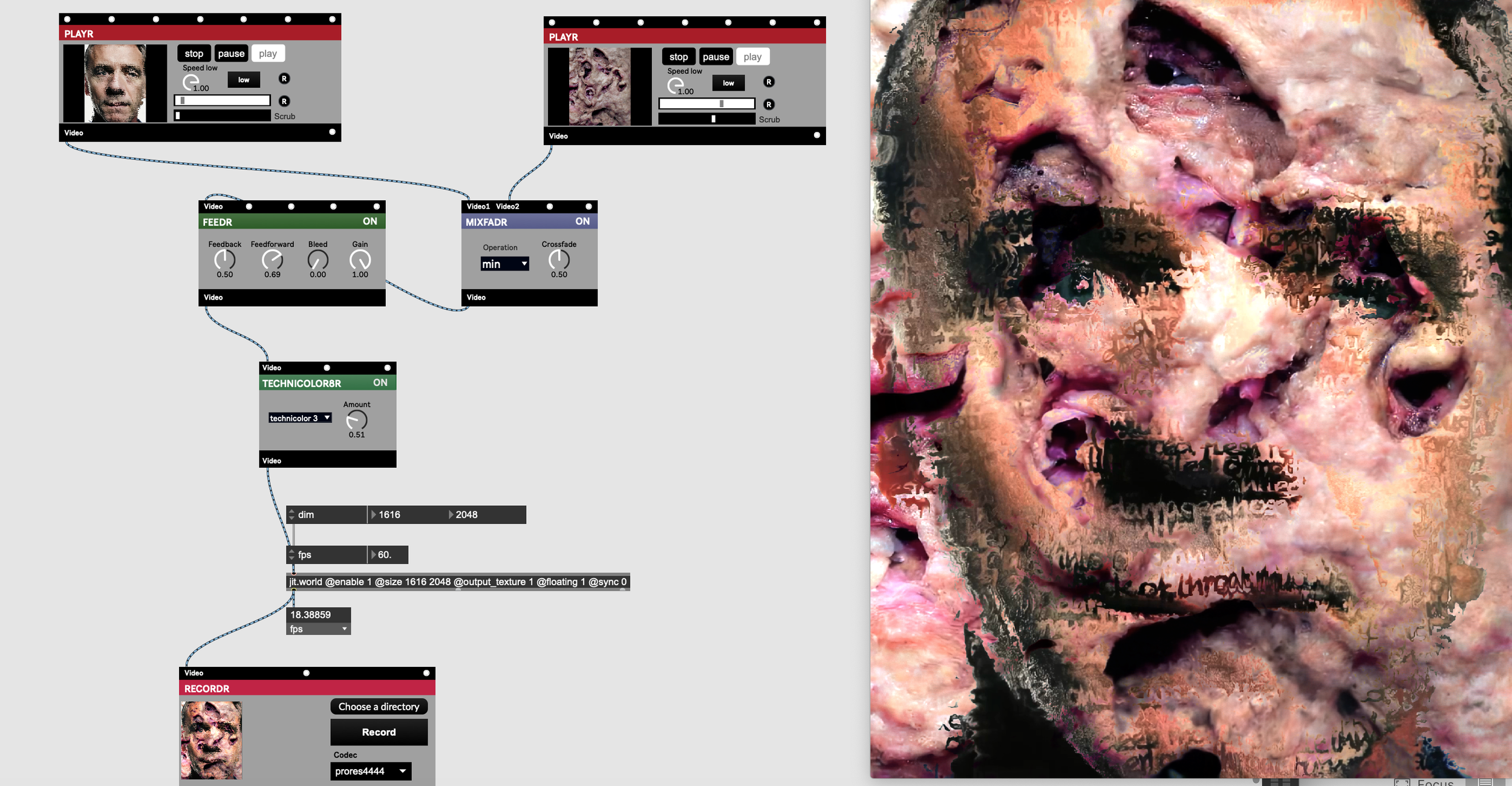
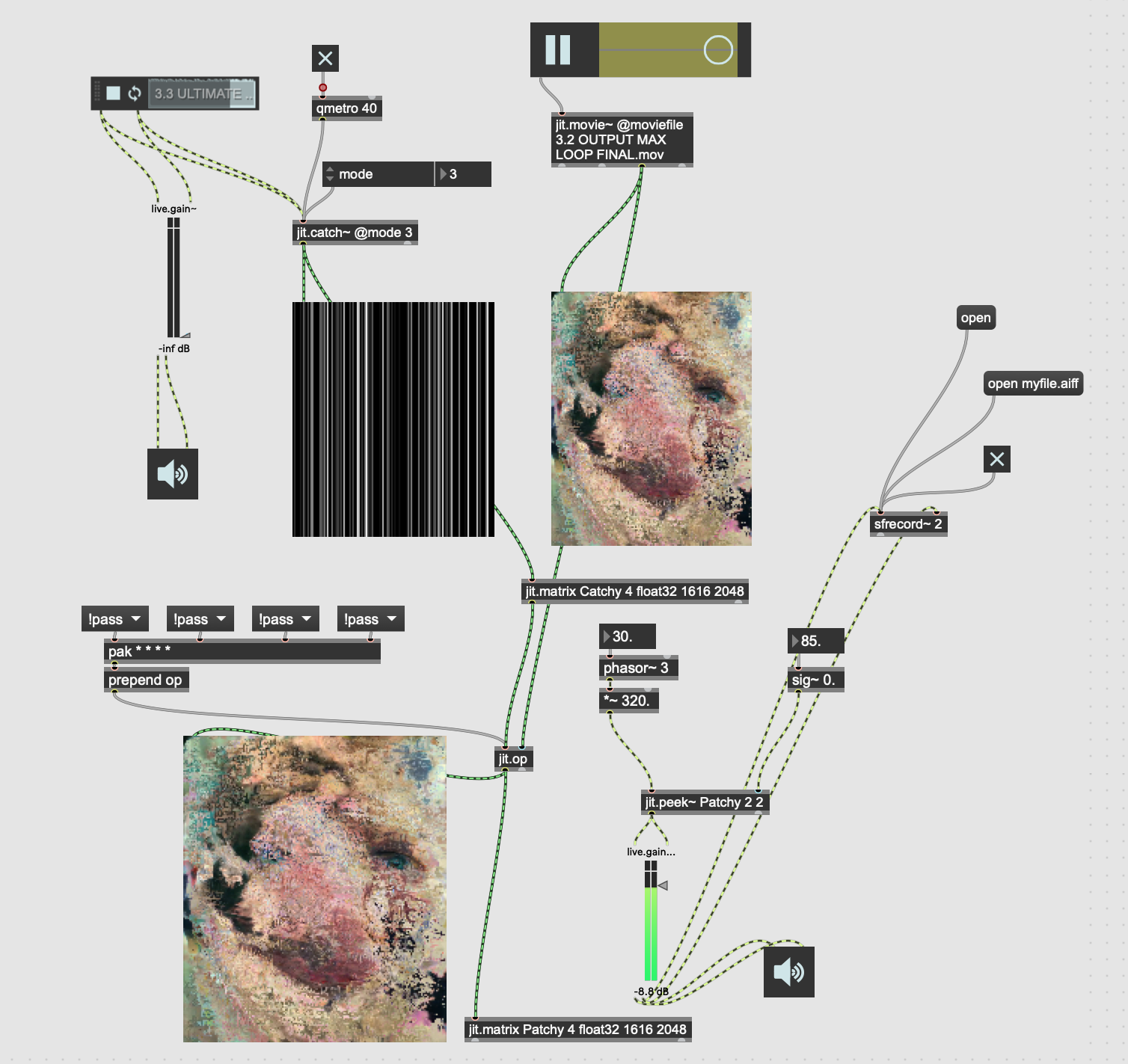
Dans cette perspective, l’image initiale, comprise comme cristallisation archétypale du « bon visage » -- au sens où il reflète les biais raciaux encodés du modèle privilégiant la valorisation d’une blancheur masculine et mature comme "standard" -- a peu à peu cédé la place à la production d’un non-visage, plus ambivalent, insaisissable et convulsif, qui perturbe les seuils perceptifs et résiste à la sédimentation de notre perception autour de références archétypales. Le processus a finalement été suturé sous forme d'une vidéo via Jitter, en cherchant à mettre au premier plan un enchevêtrement en transparence entre les prompts générés durant le procès et les transformations du visage de départ, de manière à les fondre dans une gestation organique commune.
This project was created in Automatic1111 using an SDXL checkpoint, then finalized in a Jitter patch for animation. It starts from an image generated from a prompt deliberately designed to be as standard and “average” as possible:
close up on the face of an average ordinary person, color photograph
Unsurprisingly, the outputs proposed almost systematically reproduced the stereotype of a mature white man, in a dominant and overwhelming way. From the selection of one of these images, we began a spontaneous writing of prompts, combined with the system of parentheses and brackets enabled by Automatic1111’s interface in order to modulate, on the fly, the weight of lexemes, while continuing a recursive amplification of visual and textual results over the course of generative cycles.
The production was then structured in two phases. In a first moment, we let the prompt–image loops drive a progressive dislocation of the initial stereotypical face, until reaching a high level of abstraction. In a second moment, we initiated a reconstruction phase by using Automatic1111’s Inpainting mode, which makes it possible to regenerate masked areas locally without redoing the entire image. The aim was to test to what extent a regime of production could give the face a body again while remaining caught in prompt-image recursivity, and in the form-formless tension it induces, so as not to make a fully recognizable face reappear as such.
From this perspective, the initial image--understood as the archetypal crystallization of the “proper face,” in the sense that it reflects the model’s encoded racial biases privileging the valorization of a mature, masculine whiteness as “standard”--gradually gave way to the production of a non-face: more ambiguous, elusive, and convulsive, which disrupts perceptual thresholds and resists the sedimentation of our perception around archetypal references. The process was ultimately sutured into a video via Jitter, seeking to foreground an interlacing in transparency between the prompts generated during the process and the transformations of the starting face, in order to fuse them within a shared organic gestation.
Wh!te (2024)
vidéo MP4 ; 1min 30sec ; boucle
Prompt initital et sorties générées / Initial prompt and generated outputs
Process breakdown / déroulé du processus


Façonnage d’un non-visage avec la modalité Inpainting sur Automatic1111 / Creating a non-face using the Inpainting feature on Automatic1111
Patchs Jitter et Max/MSP superposant l’évolution quasi a-morphique du visage et l’ensemble des prompts mobilisés /
Jitter and Max/MSP patches superimposing the quasi-amorphous evolution of the face and all the prompts used.